.png)
How the Central Government Achieved Its Fiscal Deficit Target for FY26

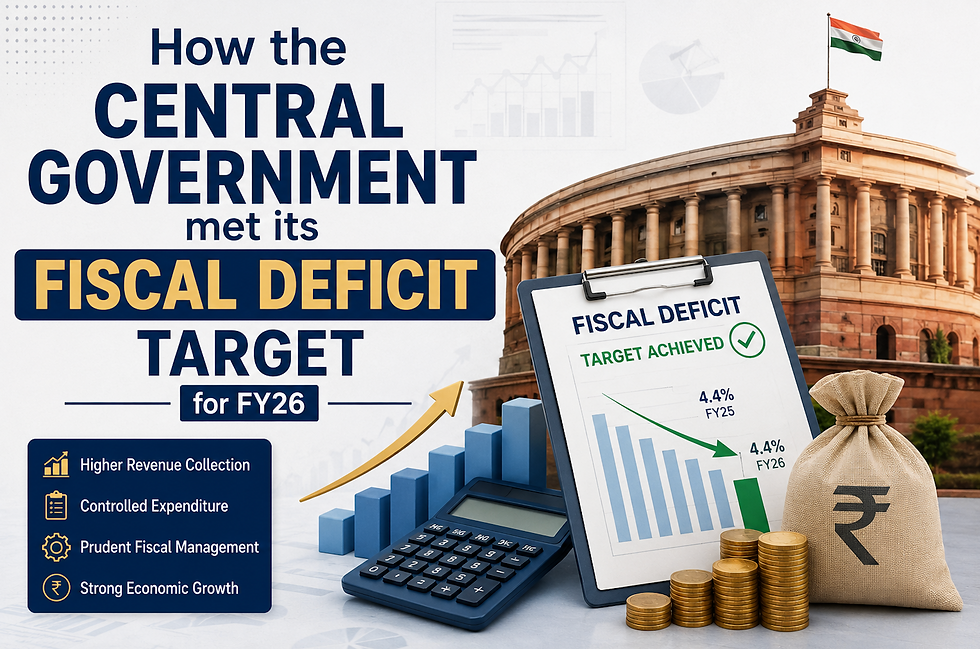
The central government’s ability to meet its fiscal deficit target for FY26 marks a significant milestone in fiscal management. Achieving this goal required a careful balance of revenue enhancement, expenditure control, and strategic reforms. This post explores the key factors and measures that helped the government stay on track, offering insights into the fiscal discipline and policy decisions behind this success.
Understanding Fiscal Deficit and Its Importance
Fiscal deficit occurs when a government's total expenditure exceeds its total revenue, excluding borrowings. It reflects the gap the government needs to finance through borrowing. Managing this deficit is crucial because a high fiscal deficit can lead to inflation, higher interest rates, and reduced investor confidence.
For FY26, the government set a clear fiscal deficit target to maintain macroeconomic stability and support sustainable growth. Meeting this target helps ensure that public finances remain healthy, borrowing costs stay manageable, and economic growth is not compromised by excessive debt.
Revenue Growth Through Tax Reforms and Compliance
One of the main drivers behind meeting the fiscal deficit target was the increase in government revenue. The government focused on expanding the tax base and improving tax compliance. Key steps included:
Simplifying tax procedures to encourage voluntary compliance and reduce evasion.
Introducing technology-driven measures such as e-invoicing and data analytics to track transactions and identify discrepancies.
Broadening indirect taxes by rationalizing exemptions and improving GST collections.
Strengthening direct tax collections by targeting high-net-worth individuals and large corporations with better enforcement.
These measures helped increase tax revenues without raising tax rates significantly, which supported economic activity while boosting government income.
Rationalizing Expenditure Without Compromising Growth
Controlling expenditure was equally important. The government adopted a disciplined approach to spending by:
Prioritizing capital expenditure over revenue expenditure, focusing on infrastructure projects that stimulate long-term growth.
Cutting non-essential subsidies and redirecting funds to targeted social welfare schemes.
Improving efficiency in public spending through better project monitoring and reducing leakages.
Implementing performance-based budgeting to ensure funds are allocated to programs with measurable outcomes.
This approach helped contain the growth of overall expenditure, keeping it aligned with revenue trends.
Strategic Borrowing and Debt Management
While borrowing is necessary to finance the deficit, the government managed its debt prudently by:
Issuing long-term bonds to spread out repayment obligations.
Maintaining a balanced mix of domestic and external debt to reduce currency risk.
Using market-friendly instruments to attract a broad investor base.
Keeping borrowing costs low through credible fiscal policies and transparent communication.
This strategy ensured that debt servicing remained sustainable and did not crowd out private investment.
Role of Economic Growth and Inflation Control
A growing economy naturally boosts government revenues through higher tax collections. The government’s focus on reforms that promote investment, ease of doing business, and export growth contributed to a steady GDP increase in FY26.
At the same time, controlling inflation helped maintain the real value of government revenues and kept interest rates stable. The central bank’s monetary policy complemented fiscal efforts by targeting inflation within a manageable range.
Examples of Key Initiatives Supporting Fiscal Discipline
Several specific initiatives played a role in meeting the fiscal deficit target:
Infrastructure push: Investments in roads, railways, and energy sectors increased capital spending efficiency.
Digital tax administration: The rollout of faceless assessments and automated refund processes reduced delays and improved compliance.
Subsidy reforms: Direct Benefit Transfer (DBT) schemes minimized leakages in fuel and fertilizer subsidies.
Public sector enterprise reforms: Disinvestment and strategic sales generated non-tax revenues and reduced fiscal burden.
These examples show how targeted policies can improve fiscal outcomes without harming growth.
Challenges Faced and How They Were Overcome
The government faced several challenges, including global economic uncertainties, commodity price fluctuations, and pandemic-related disruptions. It responded by:
Maintaining fiscal flexibility to adjust spending priorities as needed.
Building buffers through contingency funds and reserves.
Engaging with stakeholders to ensure policy coherence and market confidence.
This adaptive approach helped navigate risks while staying on course.
Lessons for Future Fiscal Management
The success in FY26 offers lessons for future fiscal planning:
Balanced approach: Combining revenue growth with expenditure control is essential.
Transparency and accountability: Clear communication and monitoring improve trust and effectiveness.
Focus on growth-enhancing spending: Capital investments yield better fiscal returns than unproductive expenses.
Use of technology: Digital tools enhance tax administration and spending efficiency.
These principles can guide sustainable fiscal policies in coming years.


Comments